Showing posts with label massage for low back pain. Show all posts

Friday, January 8, 2021

Understanding Sciatica | Basics, Massage, and the Western & Eastern Perspectives

Sciatica is a pain centered in the iliococcygeal region of the body, specifically along the path of the sciatic nerve. This nerve travels along a person's lower back, through the hips, buttocks, and down the posterior leg. Whether sharp or dull, or a fast jolt or a long-burning problem, it is frequently exacerbated by long periods of sitting, and often only occurs on one side at a time.

Sciatica itself in fact describes the symptom that is that pain, rather than a specific condition.
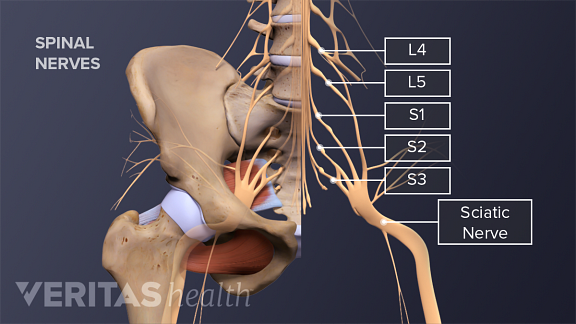
Illustration of the sciatic nerve and nerve roots 

There are no given pre-conditions for sciatica, but it primarily occurs when the sciatic nerve becomes trapped, ultra-compressed, or pinched. Potential causes of this nerve entrapment include:

  • Sedentary lifestyle, especially if it includes sitting in one position for long periods

  • Long or frequent periods of work that require carrying heavy loads and over twisting the spine

  • Diabetes, due to increased risk of nerve damage

  • Herniated disk (aka ruptured intervertebral disk)

  • Bone spurs on the spine

  • Pelvic fracture injury

  • Spinal stenosis (narrowing of the spine)

In pregnant folk, heavy lifting should be avoided regardless, but recommendations will include to lie on the side opposite the pain, to avoid long periods spent standing, and to consider swimming as an exercise.

Massage and Sciatica:

Massage is extremely beneficial for those experiencing sciatica. Most commonly, the root cause involves muscles pinching the sciatic nerve; in these cases, the relaxation, tension relief, and increased blood flow and even range of motion and flexibility with the right techniques will relieve the pain for some time, if not alleviate the symptom altogether. Endorphin release as a direct result of general massage work also helps manage pain of all kinds, and will likewise provide relief. Swedish, deep tissue, neuromuscular, myofascial release, thai yoga massage, and hot stone massages are all viable techniques.

Massage is contraindicated for sciatica usually only dependent upon the originating root cause; in the case of a herniated disk, there may be regional contraindications. Refer to a doctor in such a case, or in the case of sciatica as symptom of any degenerative or other significant spine condition, or in the case of injury.


  ======

From a Western perspective:

Mild sciatica often goes away over time. If symptoms last more than a week, or becomes severe or debilitating, people will largely be advised to seek their doctor’s help; immediate attention should be sough in particular if the pain follows a violent injury, bowel control becomes difficult, or sudden severe pain in the low back or leg or muscle numbness occurs. 

Most often, for mild sciatica, self-care will be prescribed; this usually includes gentle stretches, care taken to be hydrated and to eat well, and recommendations to increase the level of gentle but regular exercise, particularly exercise that will work the legs and hips.

Acetaminophen may be recommended as a temporary pain relief when needed, in moderation.

In addition, more and more doctors and chiropractors alike will recommend massage for clients experiencing back pain, for not only relaxation and easement of pain, but to specifically help loosen the muscles that may be pinching the sciatic nerve and causing the pain.


 ======

From an Eastern perspective:

There is no referenceable, reliable first-hand information in research papers or otherwise about treating sciatica from the perspective of TCM (Traditional Chinese Medicine), but many accounts refer to the matters of Yin & Yang and the Five Elements for insight into what might be done for a person experiencing sciatica. It may be considered a Water (Kidney) or Wood (Liver) imbalance in the Five Element system.

If the pain is hot, inflamed, sharp, then that could indicate an excessive amount of Yang energy; to contrast, if the pain is cold, dull, aching, then that could signal Yin energy in excess. Methods to balance this energy out may then be recommended by a TCM practitioner, including but not limited to certain Qi Gong moves, meditation, or breathing exercise. There may also be reference to a blockage of qi, which might occur at the site of pain. This would also be followed up by methods of movement, breathing, acupuncture treatments, tui na treatments, or even certain herb formulas as appropriate.

Though in general TCM herb treatments come in groups and blends tailor made for the client, a few potential herbs that might be recommended include Du Huo (Angelica pubescentis), Du Zhong (Eucommia), and Dang Gui (Radix Angelica Sinensis).

  • Du Huo is reported to strengthen the Kidney (Water element) system, and to thus relieve achy back pain. [May cause uterine contractions; people should not take if possibly pregnant. May cause excessive skin sensitivity in sunlight if applied topically. May be anti-inflammatory, so user should beware any contraindications with current medications.]

  • Du Zhong is reported to generally strengthen and support the body, and generally clear inflammation and ease pain. [May contain toxic compounds or heavy metals. Highly advised against for those using diabetes medications, high blood pressure medications, anticoagulants, antiplatelets, or thrombolytics. Contraindicated in people diagnosed with estrogen-dependent cancers.]

  • Dang Gui, also known as “women’s herb”,  is reported to strongly assist in improving circulation and propagate nourishment of the blood. [Contains substances that are known to cause cancer. Also not recommended for those with Protein S deficiency. Should not be taken with blood clotting medications. Can prevent blood clotting.] 


======================

Sources:

https://www.mayoclinic.org/diseases-conditions/sciatica/symptoms-causes/syc-20377435?p=1

https://medlineplus.gov/sciatica.html

https://americanpregnancy.org/healthy-pregnancy/pregnancy-health-wellness/sciatic-nerve-pain-during-pregnancy-1006/

https://www.spine-health.com/conditions/sciatica/what-you-need-know-about-sciatica

https://www.sciatica-pain.org/traditional-chinese-medicine-for-sciatica.html

https://www.healthline.com/health/massage-for-sciatica  

https://bestchinesemedicines.com/collections/back-pain-sciatica/

https://medicinalherbals.net/dang-gui/

https://www.drugs.com/npp/du-zhong.html

https://www.verywellhealth.com/what-you-need-to-know-about-eucommia-88939

https://www.webmd.com/vitamins/ai/ingredientmono-281/angelica

https://www.meandqi.com/herb-database/pubescent-angelica-root

Wednesday, February 13, 2013

Massage and Traditional Chinese Medicine


Case Study
2/11/13

I chose my client because he has low back pain, as many people do.  During the interview, he expressed that he is mostly sedentary, drives a truck all day and only exercises when taking his dogs for a walk.  He carries stress in his neck and low back and has been experiencing bouts of low energy and cold feet.  Over the next couple of sessions he later expressed that he has many ideas but had a problem getting the motivation to start them (will power) and also mentioned that he wasn’t sure what he was doing with his life and couldn’t seem to figure out what career path to follow (purpose).  These concerns in conjunction with low back pain and low energy levels immediately made me think of the Water Element.  Then my client actually said, “I feel like water, just going with the flow of life and taking the path of least resistance.”  At this point it was clear that we would be working on his Water Element.

Over the two months of the case study I gave him relaxation massages that lasted between one and two hours that included deep tissue techniques.  I also incorporated the Bladder Meridian Pattern – working the scalp, the Shu Points on the back, and the legs and the Kidney Meridian points 1-9.  I asked the client to do a couple of stretches for the low back at home, daily if possible. The first stretch is to lay down on the floor with one leg straight, the other leg is bent at the knee and laid over the straight leg, and the arm on the side of the straight leg can be used to help keep the bent leg down, turn head towards the straight arm.  The other stretch is to lie on the floor, bend knees to chest with arms around the knees/shins, and roll side to side.  To reduce stress, I asked my client to try relaxation breathing.  Sit in a chair (since it was difficult for him to sit on the floor for long periods) and breathe in through the nose and into the lower abdomen (Lower Dantian) slowly and slowly exhale through the nose while relaxing the shoulders.  Eventually he incorporated a couple of Qi gongs – Mixing Fire and Water and Reaching for Heaven and Earth (seated in a chair at first and eventually standing).

By the end of the case study my client’s low back issues as well as overall stress levels had dissipated. Energy levels have improved as well as his blood circulation.  He even found a job that he actually enjoyed!  I look forward our continual work together.

Friday, August 20, 2010

Case Study

My case study included six massages spread out over a period of nine weeks. Ideally, I would have liked to have seen my client at least once a week, but because of our different schedules and time constraints it took nine weeks to complete all six massages.

My client was a 42 year old female. During the first intake the client told me that she was on blood thinners (Coumadin). In January of 2009 she was experiencing pain in her legs, sever fatigue and dizziness. She ended up in the emergency room and it was discovered that she had many blood clots in her left leg. She was admitted to the hospital and stayed for a week under close supervision until she was stable enough to go into surgery where the Doctors placed a filter in her Vena Cava. The filter was put in place to help catch the clots so they would not go through her heart, into her lungs and cause a possible pulmonary embolism.During this time she was also placed on blood thinners, namely Coumadin, to help prevent further clotting. Her leg gets achy when she is on her feet all day and she has been told to elevate it at the end of the day. She now takes blood thinners daily and sometimes hydrocodone for the pain in her legs. The Dr.’s say she will probably have to be on Coumadin for the rest of her life. Because of the blood thinners she tends to bruise easily. She used to go in for lymphatic drainage massage (usually only the axillary and clavicle area) twice a month but doesn’t do this anymore. She has been cleared by her Dr. for regular massage therapy.

During her time in the hospital she also drastically lost weight. Since then she has had low energy and no regular physical exercise plan and has put on a lot of weight. This makes her upset and sometimes sad and frustrated about her lack of energy. She experiences swelling in her legs after extended periods of being on her feet (walking, standing, ect..) and has had difficulty staying active because of this and stress with kids, work, and everyday life. She has said that when she can fit in regular exercise her leg feels less achy and she sleeps better.
Also during the intake she indicated that she has a medium stress level and holds her stress in her shoulders and low back. She also tends to get very bad headaches when she gets very stressed out. Works in an office and has for most of her professional life.

My client’s main goal for her massage was relaxation. I could tell by the way she spoke and the concerns she had that her thoughts seemed hurried and rushed. Her eyes looked tired and tended to sigh often while she talked. Her skin was healthy and soft, well tanned. Although she had not been doing regular exercise and had gained some weight, her muscle tone was still good and her energy felt strong but tired. She had lots of tension in her neck and upper traps, with a large knot in the left occipitals. She was very sensitive in the neck area. Small bump on palmar side of right forearm (says it has been there since she was young) that could be a possible ganglion cyst. Her left leg was noticeably more swollen than her right from the iliac crest to her ankle, seemed to be more so around thigh area. Edema but not pitting. Feet were both cold and limited ROM in hip area. Some tension in low back and erector spinae and knots in L levator scapulae and R rhomboids. All shu points on back felt good except for small pluckable knot in R LV shu point.

Because of the clients blood thinner medication I used only light/moderate pressure with lots of soothing strokes. She was sensitive in certain places, liker her neck, but liked a little more pressure on her back and so I adjusted accordingly. I spent a good amount of time on face and head massage to open up and relieve tension in that area to help with headaches. I did more detailed work on her neck and upper traps to help loosen and break up stagnant energy. On her arms I emphasized strokes toward the body to help with lymph drainage and included Li 11, 10, 9 &4 to open up arms and give stagnant energy a place to go. She did not want abdominal work during the first few massages but during the last two sessions I did do some work through the sheet. On days when she had a head ache I was sure to include grasping down the GB meridian and lots of scalp massage, Li 4. Strokes on her legs were all towards the body to help with lymph drainage and I always gave a very nice foot massage to help soothe and relax. Points in her feet and legs included following Ki merdian from Ki 1, 2, 3 & 7 (8x). Lv 2-3 (50x). and St 36 (8x). On her back I used a little more pressure. Mostly long gliding strokes with focus on knots in levator scapulae and rhomboids. Sacral roll on low back and grasping. All shu points were included and stimulated 24x. On our last session I did reviving the yang to help with her low energy level (Ki1, Ki3, Sp6, St36, Cv12 Pc8, Li4, Gv15)

Over the course of the 9 weeks of treatment I saw some alleviation of tension in the neck, specifically the knot in L occipitals released. Tension also decreased in shoulders and rhomboids. When massages were weekly I noticed that her left leg was not as swollen most likely due to lymph drainage and increased circulation to that area. Her headaches were not as frequent and were always gone by the end of a massage. She really enjoyed all massages and felt very relaxed and rested. She and I plan on continuing to work together once our schedules settle into a regular routine. Now that I have learned the 64-point acupressure foot massage I would like to include that into the massage for her left foot/leg. Also, I would recommend a longer session with time at the beginning for a QiGong. She is open and interested in QiGong and I was hoping to start showing her the Dragon QiGong, which is good for weight loss and tonifying the meridians.